If you are still choosing a property, read our step-by-step guide to buying property in Spain as a foreigner. It explains what to check before you pay a deposit, how bank guarantees work when you buy off-plan, and what happens at completion.
1. When the new build handover happens
Once construction is finished, the developer tells the buyers and agrees a date for signing the purchase deed at the notary, the escritura pública de compraventa. On that day you pay the rest of the price and receive the keys. Where you can, carry out the snagging inspection before that date.
- 1
Notice
The developer announces that construction is finished and agrees the completion date.
- 2
Snagging inspection
1–3 weeks before completion: a check against the snagging checklist.
- 3
Snagging list
In writing, with photos, to the developer, with proof of receipt.
- 4
Completion and keys
Signing at the notary, payment of the balance, the keys.
- 5
Re-inspection
Defects put right and checked before the one-year period ends.
- Ask the developer for an inspection in writing, in good time. If the developer has not offered a visit before completion, contact them and agree a date. Aim for one to three weeks before completion, so the developer has time to fix what you find.
- If an inspection before signing is not possible, do the handover inspection straight after you get the keys, before furniture arrives and before any work starts. That avoids arguments about when the damage appeared and whose fault it was.
- Allow several hours. A two-bedroom apartment with a terrace cannot be checked properly in a short visit.
- Bring the documents: the contract, the floor plan and the specification of materials (memoria de calidades). Compare the finishes, materials and appliances actually fitted with what the contract and the specification promise.
2. Your rights: the new build warranty periods in Spanish law
The periods during which those involved in the construction are liable to buyers are set in article 17 of the Spanish building act, Ley 38/1999 de Ordenación de la Edificación (LOE).
1year
Finishes and workmanship
Paintwork, tiles, doors, minor unfinished work.
3years
Habitability
Defects in construction elements and building services: damp, leaks, noise, insulation.
10years
Structure
Foundations, columns, beams, floor slabs, load-bearing walls.
Important: the warranty periods do not start on the day you get your keys. They start on the date the developer formally took over the building from the builder (recepción de la obra, article 6 of the same act). Several months can pass between the two dates, so by the time you complete, part of the one-year period for defects in the finishes may already have run. To find the start date, ask for the formal acceptance record (acta de recepción). It forms part of the building logbook (Libro del Edificio), which article 7 of the act says must be handed to the owners.
- The developer is jointly liable with everyone else involved in the construction (article 17.3). You can therefore claim repairs directly from the developer.
- You have two years to go to court from the moment the damage appears (article 18). When you find a defect, record it straight away and notify the developer in writing.
3. What to bring
For your own inspection
- Documents: the contract, the floor plan, the specification of materials (memoria de calidades).
- A charged phone: photograph every defect close up and from a distance, so it is clear where it is.
- A torch: light shone along a surface shows up uneven walls and floors.
- Masking tape: to mark the spots where you find defects.
- A socket tester or a phone charger: to try every socket.
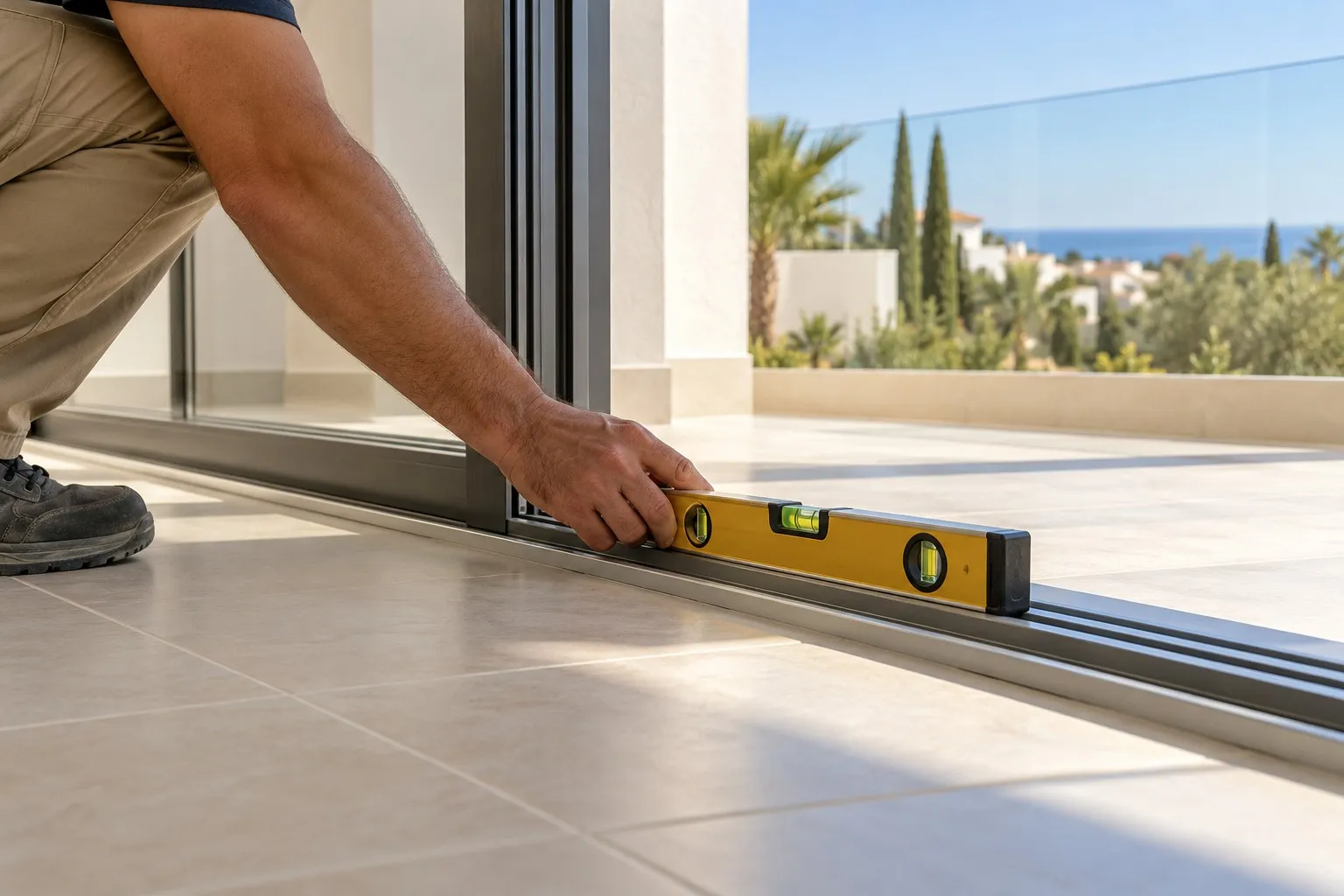
- A spirit level and a tape measure: to check falls, flatness and room sizes.
The specialist’s tools
- A moisture meter: to check walls for damp, especially near windows, in bathrooms and next to the terrace.
- A thermal camera: shows temperature differences that can point to cold bridges, wet patches or faults in underfloor heating.
- An RCD and earth tester: for electrical safety.
4. New build snagging checklist
Complete the checklist on your phone. Your selections are saved in your browser.
- Floor area and layout match the contract and the plan
- Finishes, appliances and sanitaryware match the specification (memoria de calidades)
- Manuals and warranty documents for the appliances and air conditioning handed over
- Building documents received or requested: the building logbook (Libro del Edificio) with the formal acceptance record
- Water and electricity meter readings noted and photographed
Defect list
Mark each item OK or Defect. Every defect goes straight into a list you can copy and send to the developer.
Your selections are saved only in this browser.
5. Found defects? Prepare your snag list and agree the next steps
- Make a numbered snag list (snagging list) with photos. Each defect is a separate item: the room, what is wrong, one photo from a distance and one close up.
- Give the list to the developer in writing, before or on the day of signing, and get proof of receipt: a signed copy or a reply by email. Your lawyer decides how to record it in the completion documents.
- Agree a deadline for the repairs and a re-inspection once they are done. Do not mark a defect as resolved until you have checked the repair.
- Keep everything: the list, the correspondence, the photos before and after. If the developer drags its feet, this is your evidence.
- If the developer does not respond, the next step is a formal claim (reclamación) through your lawyer and, for serious defects, a report from an independent expert (peritaje). Keep the two-year limit for going to court in mind (article 18 of Ley 38/1999).
Tip: the first year after you get the keys matters too. Some defects do not show at once: shrinkage cracks, leaks after the first heavy rain, air conditioning problems in summer. Put a re-inspection in your calendar a couple of months before the one-year period for finishes ends.
6. Snagging on your own or with an engineer
You can check many items yourself, including taps, sockets, windows, doors and finishes. Hidden damp, thermal bridges, incorrect drainage falls, electrical faults and departures from the design can be harder to identify. Specialist equipment and experience help with these checks. Defects discovered after the warranty period may be costly to put right.
An engineer at the handover inspection is most useful if you do not live in Spain, do not speak Spanish, or bought off-plan and never saw the building go up.